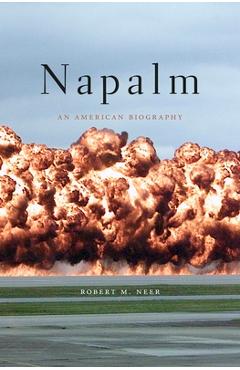
Napalm: An American Biography - Robert M. Neer
Preț verificat
Link afiliat — comisionul nu schimbă prețul tău. Cum funcționăm
Detalii
- Brand
- Robert M. Neer
- Categorie
- History
- Magazin
- libris.ro
- Cod (GTIN)
- 9780674088085
Descriere de la libris.ro
nNapalm, incendiary gel that sticks to skin and burns to the bone, came into the world on Valentine's Day 1942 at a secret Harvard war research laboratory. On March 9, 1945, it created an inferno that killed over 87,500 people in Tokyo--more than died in the atomic explosions at Hiroshima or Nagasaki. It went on to incinerate sixty-four of Japan's largest cities. The Bomb got the press, but napalm did the work. After World War II, the incendiary held the line against communism in Greece and Korea--Napalm Day led the 1950 counter-attack from Inchon--and fought elsewhere under many flags. Americans generally applauded, until the Vietnam War. Today, napalm lives on as a pariah: a symbol of American cruelty and the misguided use of power, according to anti-war protesters in the 1960s and popular culture from Apocalypse Now to the punk band Napalm Death and British street artist Banksy. Its use by Serbia in 1994 and by the United States in Iraq in 2003 drew condemnation. United Nations delegates judged deployment against concentrations of civilians a war crime in 1980. After thirty-one years, America joined the global consensus, in 2011. Robert Neer has written the first history of napalm, from its inaugural test on the Harvard College soccer field, to a Marine Corps plan to attack Japan with millions of bats armed with tiny napalm time bombs, to the reflections of Phan Thi Kim Phuc, a girl who knew firsthand about its power and its morality. nNapalm, incendiary gel that sticks to skin and burns to the bone, came into the world on Valentine's Day 1942 at a secret Harvard war research laboratory. On March 9, 1945, it created an inferno that killed over 87,500 people in Tokyo--more than died in the atomic explosions at Hiroshima or Nagasaki. It went on to incinerate sixty-four of Japan's largest cities. The Bomb got the press, but napalm did the work.After World War II, the incendiary held the line against communism in Greece and Korea--Napalm Day led the 1950 counter-attack from Inchon--and fought elsewhere under many flags. Americans generally applauded, until the Vietnam War. Today, napalm lives on as a pariah: a symbol of American cruelty and the misguided use of power, according to anti-war protesters in the 1960s and popular culture from Apocalypse Now to the punk band Napalm Death and British street artist Banksy. Its use by Serbia in 1994 and by the United States in Iraq in 2003 drew condemnation. United Nations delegates judged deployment against co
Mai multe de la libris.ro
 libris.ro
Special Providence: American Foreign Policy and How It Changed the World - Walter Russell Mead
727,18RONpreț anterior: 807,98reducere −10% libris.ro
Star Wars Art: Ralph McQuarrie - Ralph McQuarrie
1.096,50RONpreț anterior: 2.193reducere −50% libris.ro
Berkshire Encyclopedia of World History: Second Edition Vol.6 - William H. McNeill, Jerry H. Bentley, David Christian, Ralph C. Croizier, J.R. McNeill, Heidi Roupp, Judith P. Zinsser
979,20RONpreț anterior: 1.958,40reducere −50% libris.ro
Clark's Positioning in Radiography 13E - A. Stewart Whitley, Gail Jefferson, Ken Holmes, Charles Sloane, Craig Anderson, Graham Hoadley
672RONpreț anterior: 1.344reducere −50%