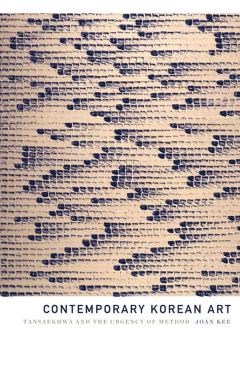
Contemporary Korean Art: Tansaekhwa and the Urgency of Method - Joan Kee
Preț verificat
Link afiliat — comisionul nu schimbă prețul tău. Cum funcționăm
Detalii
- Brand
- Joan Kee
- Categorie
- Art
- Magazin
- libris.ro
- Cod (GTIN)
- 9780816679881
Descriere de la libris.ro
n n nStarting in the mid-1960s, a group of Korean artists began to push paint, soak canvas, drag pencils, rip paper, and otherwise manipulate the materials of painting in ways that prompted critics to describe their actions as methods rather than artworks. A crucial artistic movement of twentieth-century Korea, Tansaekhwa (monochromatic painting) also became one of its most famous and successful. Promoted in Seoul, Tokyo, and Paris, Tansaekhwa grew to be the international face of contemporary Korean art and a cornerstone of contemporary Asian art. n n nIn this full-color, richly illustrated account--the first of its kind in English--Joan Kee provides a fresh interpretation of the movement's emergence and meaning that sheds new light on the history of abstraction, twentieth-century Asian art, and contemporary art in general. Combining close readings, archival research, and interviews with leading Tansaekhwa artists, Kee focuses on an essential but often overlooked dimension of the movement: how artists made a case for abstraction as a way for viewers to engage productively with the world and its systems. As Kee shows, artists such as Lee Ufan, Park Seobo, Kwon Young-woo, Yun Hyongkeun, and Ha Chonghyun urgently stressed certain fundamentals, recognizing that overwhelming forces such as decolonization, authoritarianism, and the rise of a new postwar internationalism could be approached through highly individual experiences that challenged viewers to consider how they understood their world rather than why. n n nAgainst the backdrop of the Cold War, decolonization, and the declaration of martial law in South Korea, these artists asked questions that continue to resonate today: In what ways can art matter to the world? How does art exert agency when its viewers live in times of explicit or implicit duress? How can specific social and political conditions inspire or influence methods and styles? n nn
Mai multe de la libris.ro
 libris.ro
Star Wars Art: Ralph McQuarrie - Ralph McQuarrie
1.096,50RONpreț anterior: 2.193reducere −50%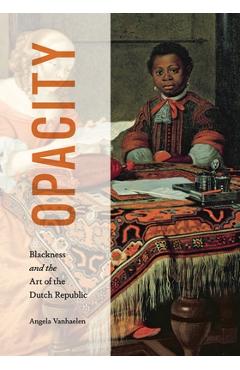 libris.ro
Opacity: Blackness and the Art of the Dutch Republic - Angela Vanhaelen
795,07RONpreț anterior: 883,41reducere −10% libris.ro
Berkshire Encyclopedia of World History: Second Edition Vol.6 - William H. McNeill, Jerry H. Bentley, David Christian, Ralph C. Croizier, J.R. McNeill, Heidi Roupp, Judith P. Zinsser
979,20RONpreț anterior: 1.958,40reducere −50% libris.ro
Clark's Positioning in Radiography 13E - A. Stewart Whitley, Gail Jefferson, Ken Holmes, Charles Sloane, Craig Anderson, Graham Hoadley
672RONpreț anterior: 1.344reducere −50%